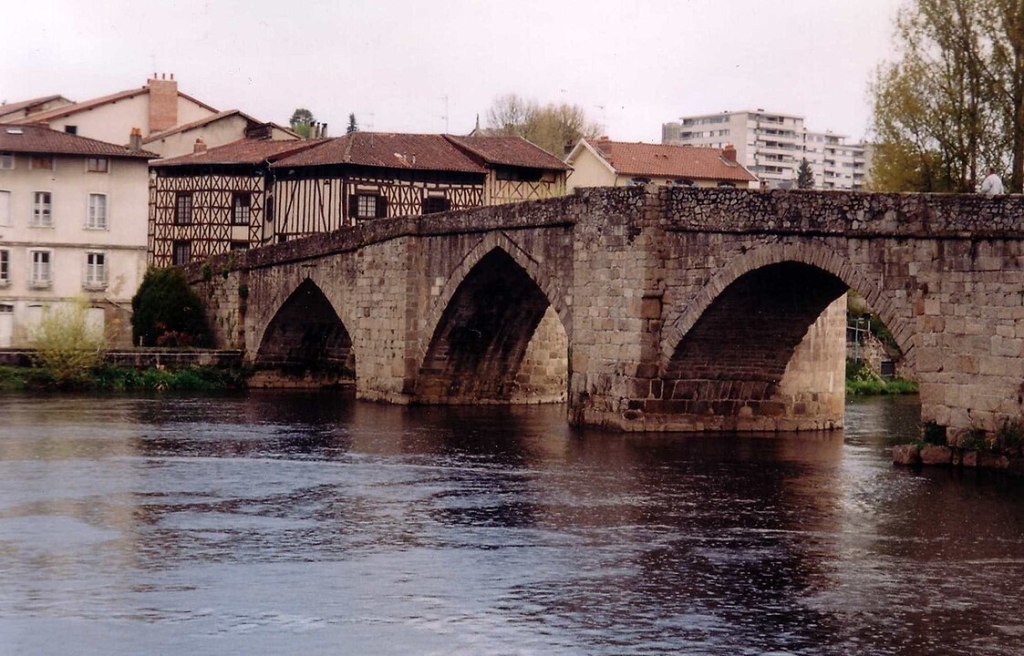
Limoges, in the Nouvelle-Aquitaine region of France, sits on the Vienne River, about 300 kilometers south of Paris. Limoges is the capital of the Haute-Vienne department with a population of around 130,000 people.
All places mentioned in this itinerary have been Google Mapped for you.
The potters
The city’s biggest claim to arts and crafts is its porcelain, produced now for over 400 years – second only to the government-owned Sevres factory.
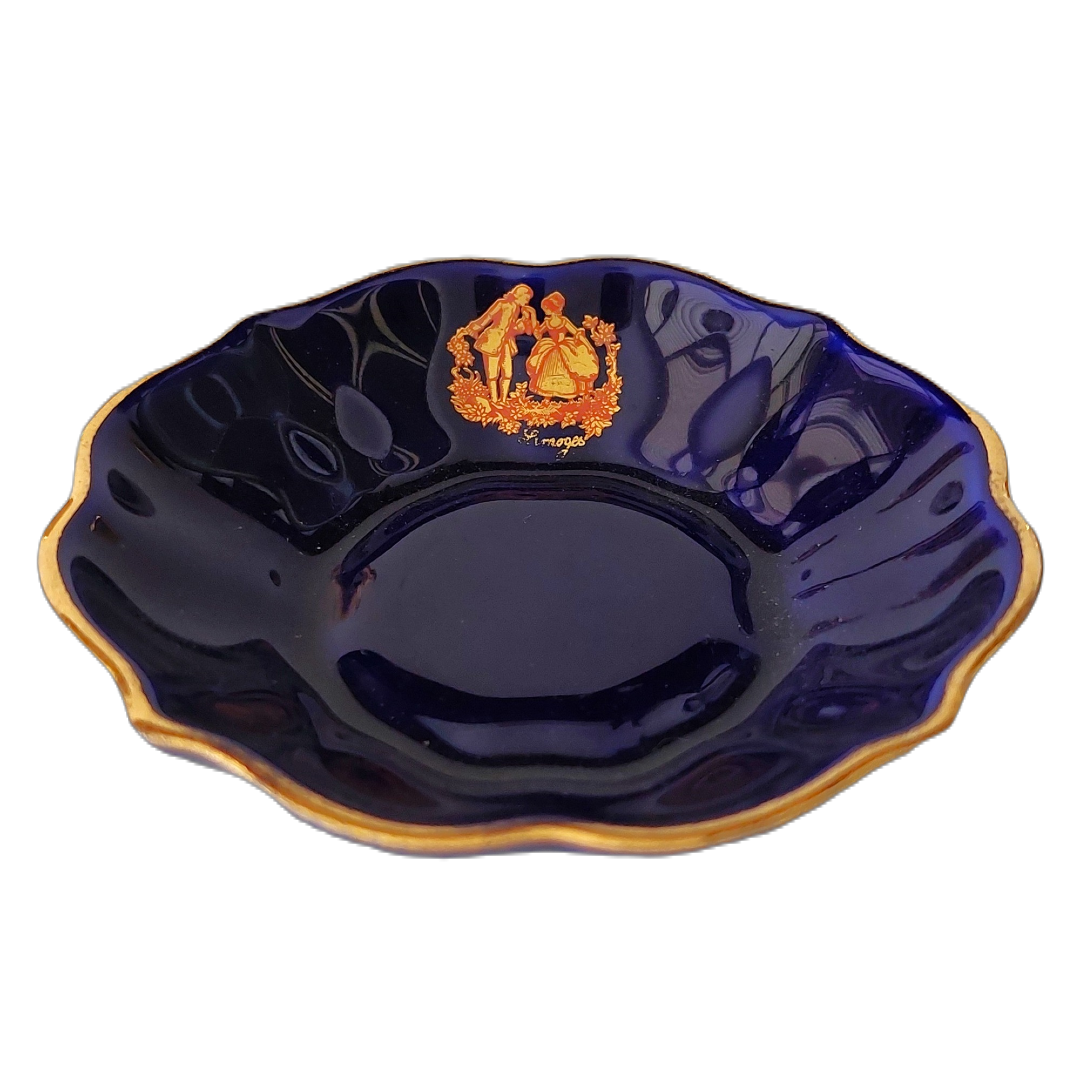

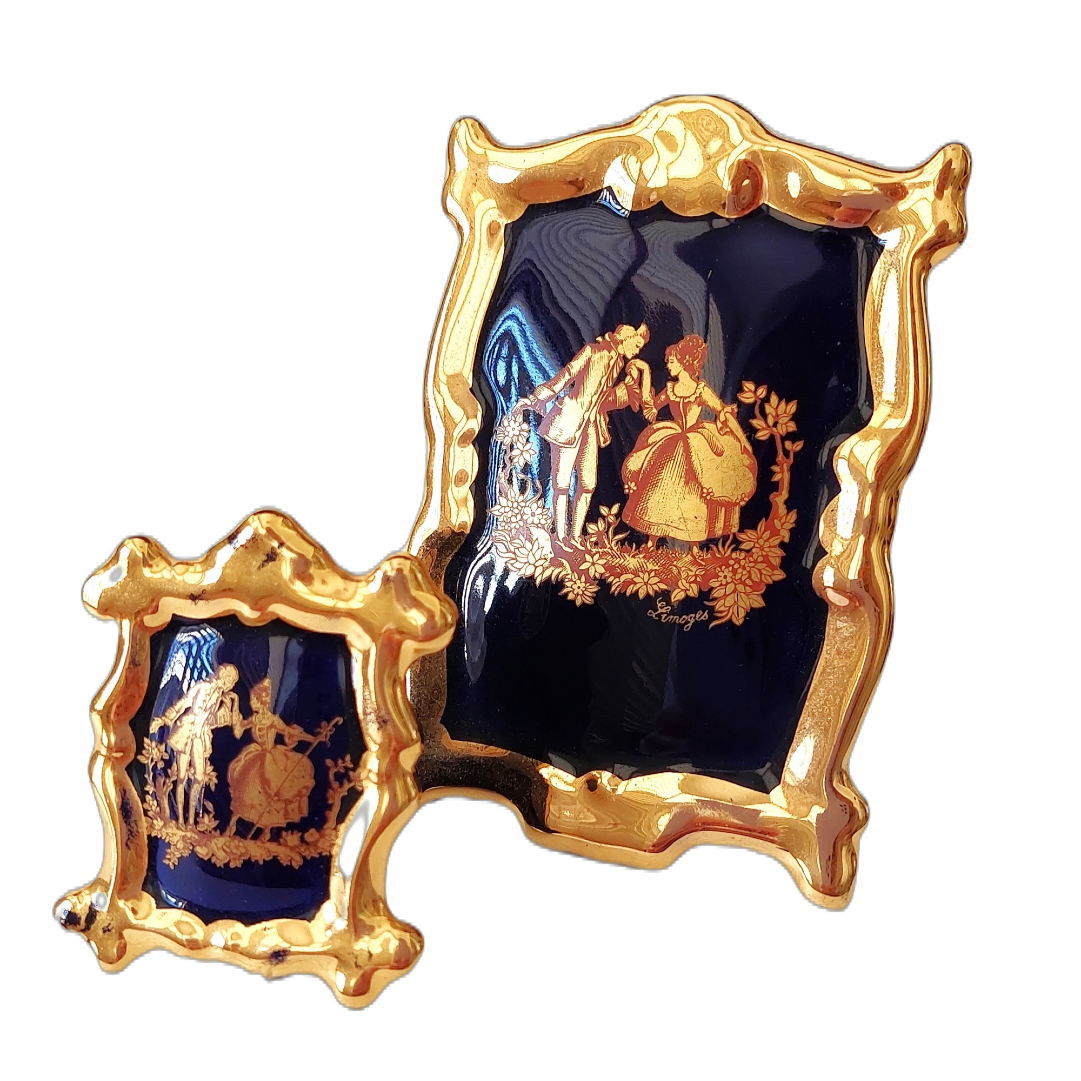

Classic Courting Couple blue gold Limoges miniatures
In the early 19th century, the Limoges porcelain industry experienced a period of rapid growth. This was due to a number of factors, including the introduction of steam-powered machines, and the increasing demand for porcelain from both domestic and international markets.
By the mid-19th century, Limoges had become one of the world’s leading producers of porcelain. The city’s porcelain factories flourished in ceramics production, including tableware, vases, and figurines. Limoges porcelain was known for its high quality and its intricate designs.
The Limoges porcelain industry continued to thrive throughout the 20th century. However, in recent years, the industry has faced some challenges, such as competition from lower-cost producers and imitations. Nevertheless, the Limoges porcelain industry remains important to the city’s economy and culture.
Today, there are a number of porcelain factories remaining. Some of the more well-known brands include Bernardaud, Haviland, and Raynaud which produce traditional tableware to contemporary designs.
Make a stop at the Musée Adrien Dubouché to see the largest collection of Limoges porcelain in the world.
Food of the region
A popular family meal dish from the Limoges region is daube de boeuf. Daube de boeuf is a beef stew that is cooked slowly in red wine, vegetables, and herbs. The stew is typically served with mashed potatoes or noodles.

Renoir’s birthplace
Pierre-Auguste Renoir – the father of Impressionism – was born in Limoges in 1841. At the age of 13 to help his family out of poverty, Renoir began working as a painter at a local porcelain factory. However, he quickly realized that his true passion was art, and he enrolled in the École des Beaux-Arts in Paris in 1861.
At the Beaux-Arts, Renoir met Claude Monet and other artists who would later become known as the Impressionists. Together, they rebelled against the traditional academic style of painting, preferring instead to capture the fleeting effects of light and atmosphere. The Salon disapproved of Renoir’s Impressionist works, but he eventually gained recognition and his paintings became highly sought-after by collectors.

Image source: Wikipedia
Renoir’s work has had a profound influence on other artists, including Pablo Picasso, Henri Matisse, and Edgar Degas, and on fashion designers also. Renoir’s depictions of the dress of the period captures the latest trends of the late 19th century, from the womens’ voluminous skirts and elaborate hats to the mens’ tailored suits and bowler hats.
Discover Renoir’s art at the Met
Visiting Limoges
For the outdoor adventurers, hikers and cyclists, Lac de Vassivière may hit the spot on your next French itinerary. It is located about 50 kilometers from Limoges.
Lac de Vassivière is a large artificial lake created in the 1950s. Surrounded by forests and hills, you’ll find it a popular destination for swimming, boating, fishing, and hiking. It also serves as a great base camp for exploring a number of medieval villages, chateaux, and other historical sites in the vicinity, such as Chalucet-Ligoure.
The township of Vassivière offers visitors a variety of hotels, campgrounds, and vacation rentals to sample the local dining and shopping experiences.
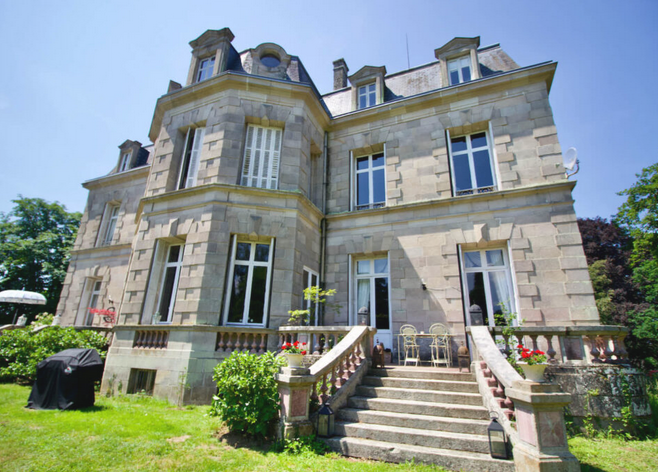
If you’d like a little more luxury out of the town centre, check in to the Chateau Les Villettes built in the early 19th century.

 Hey Darls
Leave a Reply
You must be logged in to post a comment.